Discovering the Undiscovered Talent of Damian Rimmer
Artists Insight
In a space founded on the belief that there are no accidents, Damian Rimmer emerges as the happiest of non, accidents. Introduced through a valued colleague, his incredible work steps out from what might otherwise have been anonymity, and into the world.
His work is a refined fusion of digital precision and human emotion. His images reveal the subconscious architecture of modern life, where nostalgia meets futurism, and decay is rendered with unexpected beauty. Beneath surfaces of glass, metal, and concrete, Rimmer uncovers a visual language that feels both intimate and architectural, designed not merely to be seen, but to be experienced within a space.
Using photography and advanced digital processes to capture, assemble, and transform, he explores the worlds we build around ourselves, the overlooked beauty of the ordinary, and the organic poetry hidden within the machine, age landscape. Photography anchors his images in reality; digital manipulation pushes them into an emotional, almost subconscious space. Through layered textures and bold, deliberate colour, he creates scenes that feel one step away from our world, yet unmistakably parallel to it.
Long before the internet reshaped visual culture, Damian was fascinated by computers, not merely as tools, but as an artistic medium in their own right. His work taps into something primal: the forgotten interiors of modern life, the raw materials of progress, and the uneasy relationship between technology and humanity.
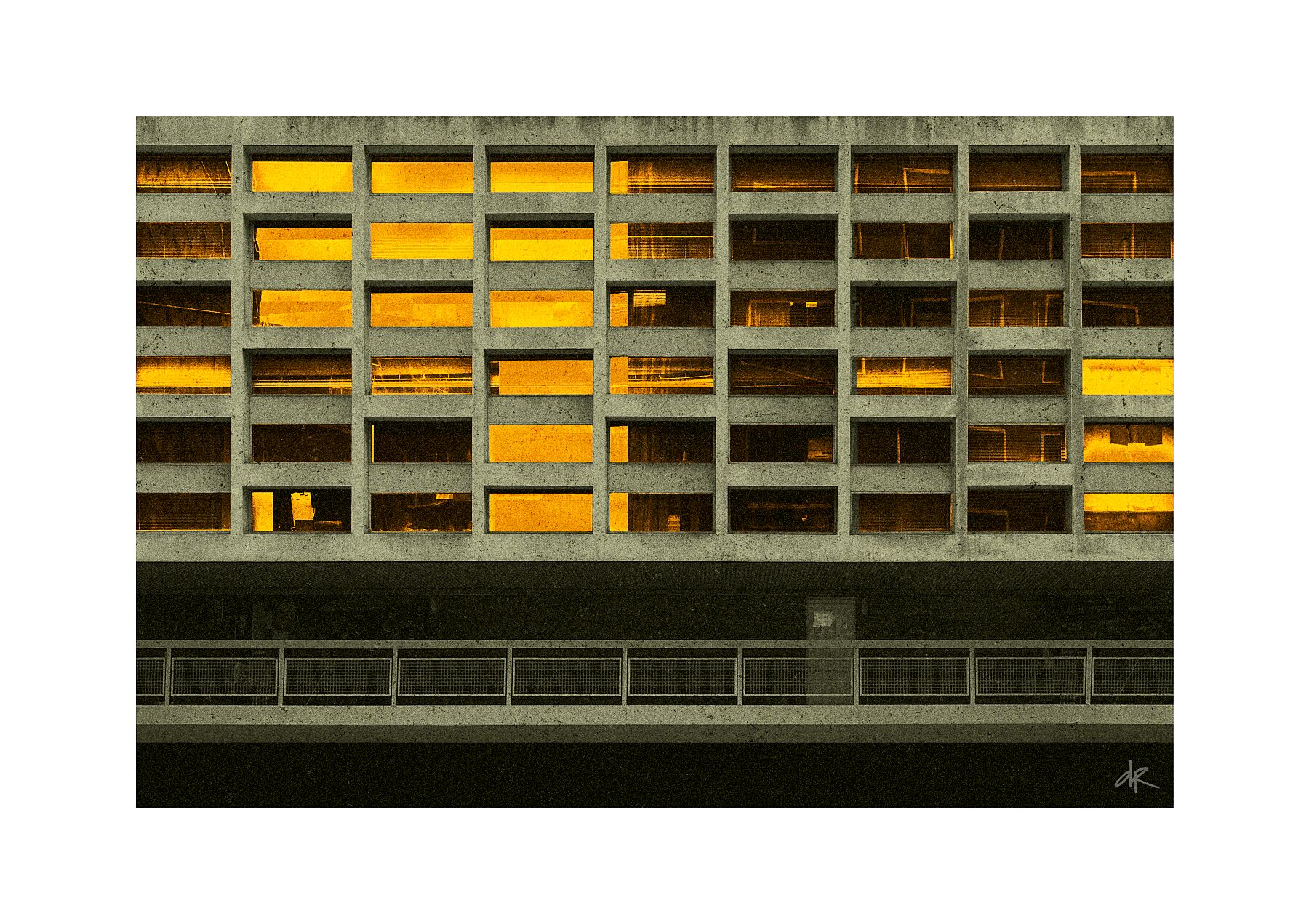
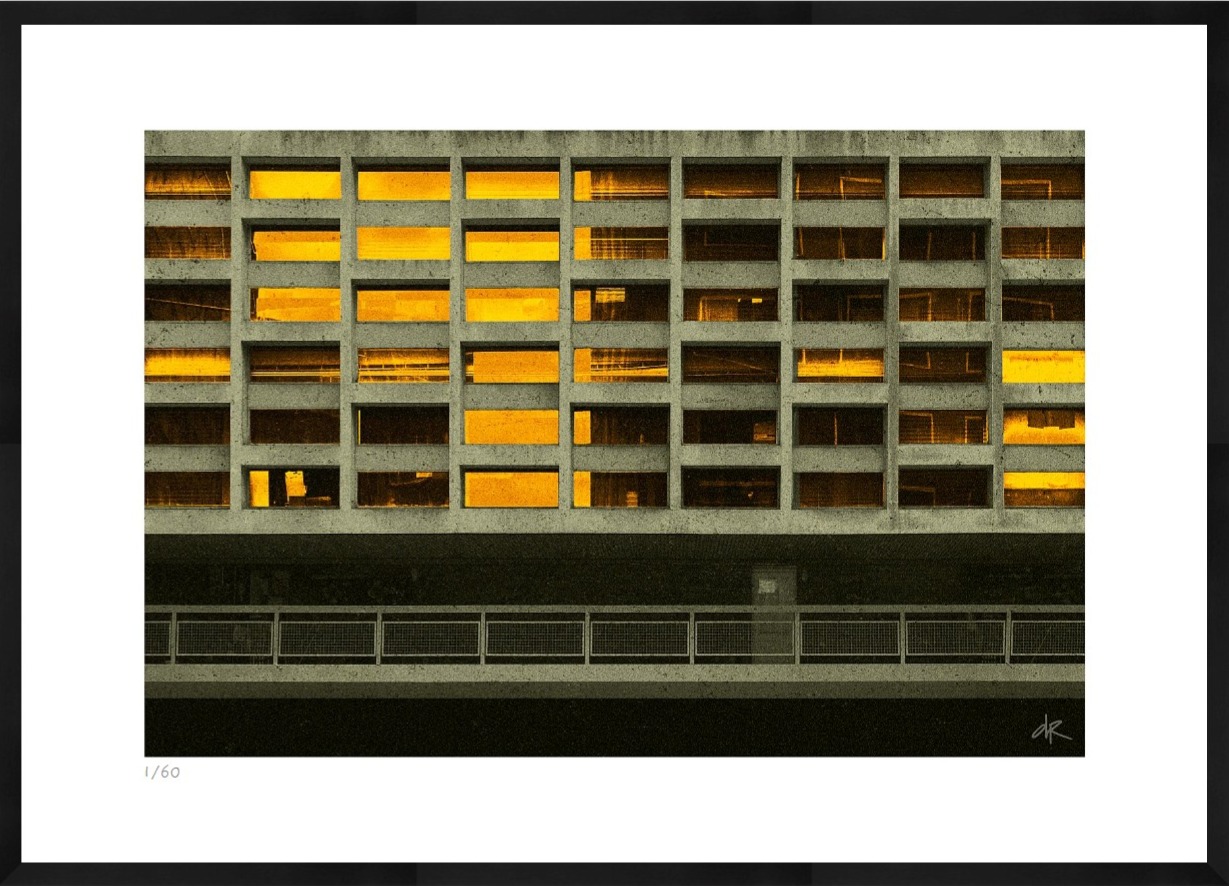
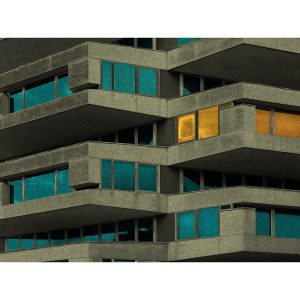
One of his most striking bodies of work reinterprets Brutalist architecture. The rigid grids and repetitive windows of concrete skyscrapers are transformed into hypnotic, almost meditative compositions. What was once cold and imposing becomes rhythmic, abstract, and strangely beautiful, revealing an unexpected emotional depth within industrial form. His exploration of organic subject matter is equally compelling. In “Skull with Horns,” a weathered, tactile form is set against an unnatural cyan field, evoking a sense of mythic permanence. The piece feels archaeological and futuristic at once, a relic suspended outside of time.
Where most see obsolete hardware, Damian uncovers a sculptural, almost alien beauty. His close, up studies of circuit boards (a future release), microchips, and electronic components transform discarded technology into intricate visual landscapes. These works function as modern relics, artifacts of a civilisation defined by plastic, metal, and glass, yet pulsing with human intention and emotion.









Reviews
There are no reviews yet.