How to Choose Art for Your Living Room Without Defaulting to Safe Decor
Learn how to choose art for your living room with more confidence, better scale, and a stronger sense of identity than safe decorative filler.
| Lara Journo | Interiors
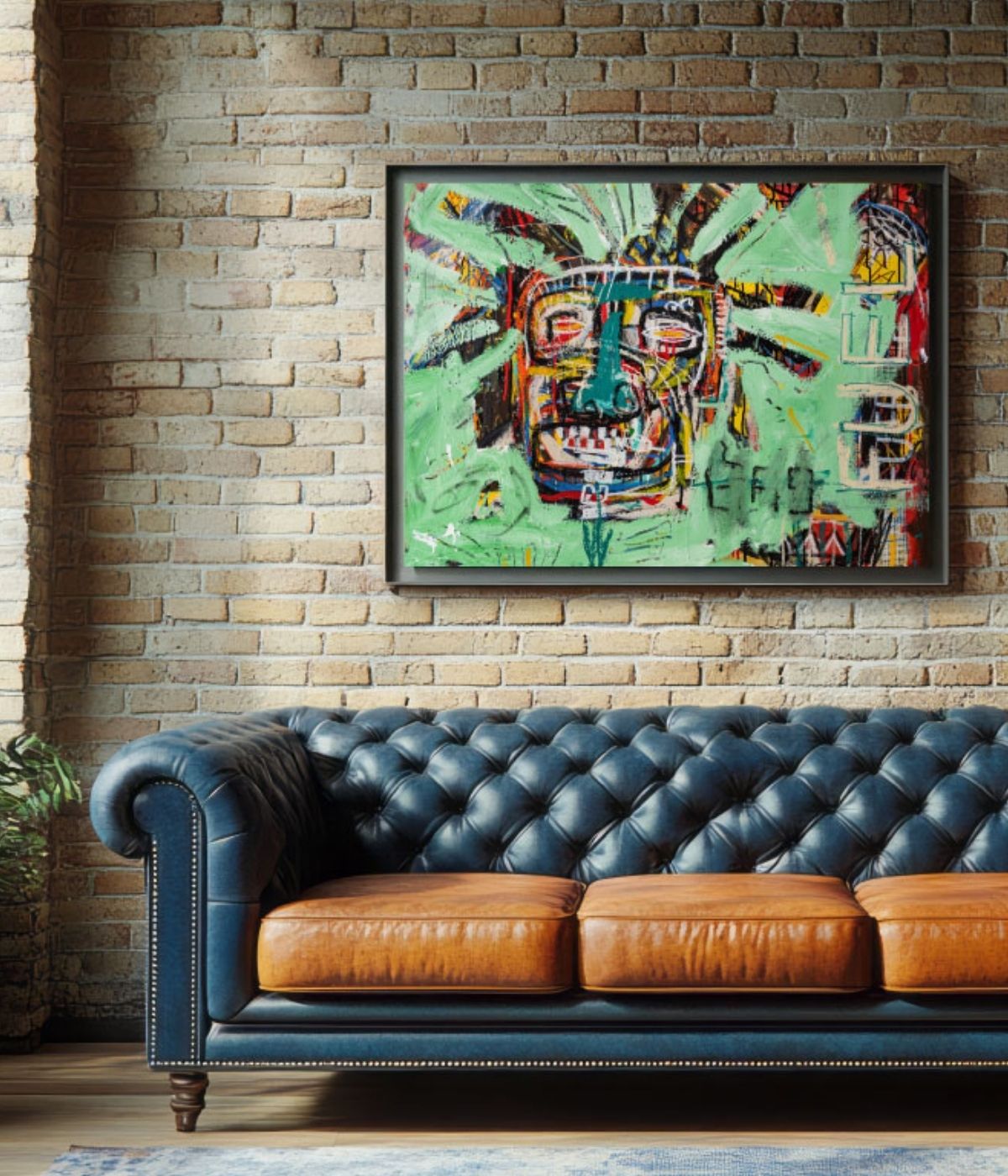
Choosing art for your living room is rarely just about filling an empty wall. It is about deciding what kind of presence you want the room to have. A living room carries more visual pressure than almost any other space in a home. It is where people gather, where your eye returns most often, and where the wrong piece can make everything feel either unfinished or forgettable.
That is why the best living room art is not chosen by playing it safe. It is chosen by understanding what the room needs and whaT kind of feeling you want it to create.
START WITH PRESENCE, NOT COLOUR MATCHING
One of the most common mistakes people make when deciding how to choose art for your living room is starting with matching.
They look for something that picks up a cushion colour, fits neatly with the sofa, or avoids standing out too much.That approach usually produces art that behaves like background decoration rather than a defining part of the room.
A better question is this: what do you want the artwork to do? Great living room art usually does at least one of three things. It adds drama, creates atmosphere, or introduces personality. Sometimes it does all three at once.
If the room already has a calm palette, the artwork can bring conviction. If the room feels flat, the right piece can create tension and energy. If the room is polished but generic, art is often what makes it feel owned rather than staged.
THINK ABOUT SCALE EARLIER THAN FEELS NECESSARY
Scale is one of the biggest reasons living room art fails. People often buy pieces that are too small because smaller feels safer. But safe scale usually reads as apologetic scale.
If you have a long sofa, a large open wall, or high ceilings, the artwork needs enough presence to hold that space. One confident piece is often stronger than several small decorative ones. A statement work gives the room a centre of gravity. Smaller pieces can still work, but they need deliberate grouping and a clear relationship to the furniture beneath them.
When in doubt, imagine the piece from the far end of the room rather than from directly in front of the wall. Living room art should still feel intentional at a distance.
USE SUBJECT MATTER TO SHAPE THE ROOM’S TONE
Subject matter matters more than many buyers expect. Different kinds of images bring very different energies into a room.
Wildlife imagery can feel bold, alive, and sculptural. Iconic photography can add cultural edge. Cinematic compositions can create
mood and depth. Minimal abstract work can bring quiet structure. The right subject does not just decorate the room. It influences how the room feels to spend time in.
This is why choosing art for your living room is less about asking what goes with the room and more about asking what kind of room you want to create.
DON’T SEPARATE THE ART FROM THE WAY YOU LIVE
Some people choose art as if it belongs to a different category from the rest of the home. But the most convincing rooms are usually the ones where the art feels connected to real life. The piece should suit the rhythm of the space. A dramatic print in a social room can become a conversation point. A quieter piece in a slower room can bring calm and focus.
Think about what you want to feel when you sit there regularly. The best art is not just visually correct. It feels right over time.
QUALITY CHANGES HOW THE ARTWORK IS EXPERIENCED
Even a strong image can fall flat if the production is weak. This is one reason premium print quality matters so much in a living room.
A gallery-grade giclée print on respected paper such as Hahnemühle has more tonal depth, clarity, and physical presence than generic poster production. You notice it in the blacks, the detail, the edges, and the way the work holds the wall.
For a space as visible as a living room, that difference matters. It is often what separates a piece that feels considered from one that feels disposable.
USE CURATION AS A SHORTCUT TO BETTER DECISIONS
If you are unsure where to start, curation helps. A gallery or collection with a clear point of view reduces noise. Instead of sorting through thousands of disconnected options, you are choosing within a frame of quality and aesthetic consistency. That does not remove your taste from the process. It makes your taste easier to trust.
FINAL THOUGHT
If you are wondering how to choose art for your living room, the answer is not to look for the least risky option. It is to choose the
piece that gives the room identity, confidence, and presence. The best rooms usually contain at least one artwork that makes the
whole space feel more certain.